AI Romance Bot: Best Platforms for AI Companionship & Roleplay (April 2026)
2026-04-21
In April 2026, falling in love with an AI is no longer science fiction — it's a statistic. One in five American adults has had an intimate encounter with a chatbot, according to a New York Times investigation (The New York Times). The global AI companion market has surged to $49.52 billion in 2026, growing at a 31.24% CAGR toward $435.9 billion by 2034 (Fortune Business Insights). And AI companion user counts have surpassed 420 million monthly active users — up from 180 million in 2023 (openPR).
The demand is real. But most AI romance bots share the same fundamental problem: they're designed to keep you on the platform, not to give you something genuinely useful. As the American Psychological Association's 2026 Trends Report put it: "AI isn't designed to give you great life advice. It's designed to keep you on the platform" (APA).
Jenova takes a different approach. Instead of a single chatbot that tries to be everything — friend, therapist, lover, writing partner — Jenova provides specialized AI agents, each with deep domain expertise, unlimited persistent memory, and multi-model access across GPT-5.4, Claude Opus 4.6, Gemini 3.1 Pro, and models from xAI and DeepSeek. Whether you want immersive roleplay through the Roleplay Game Master, romance fiction through the Creative Fiction Writer, or real dating strategy through the Dating App Advisor, each Agent is purpose-built for its domain — not a generic chatbot wearing a romantic skin.
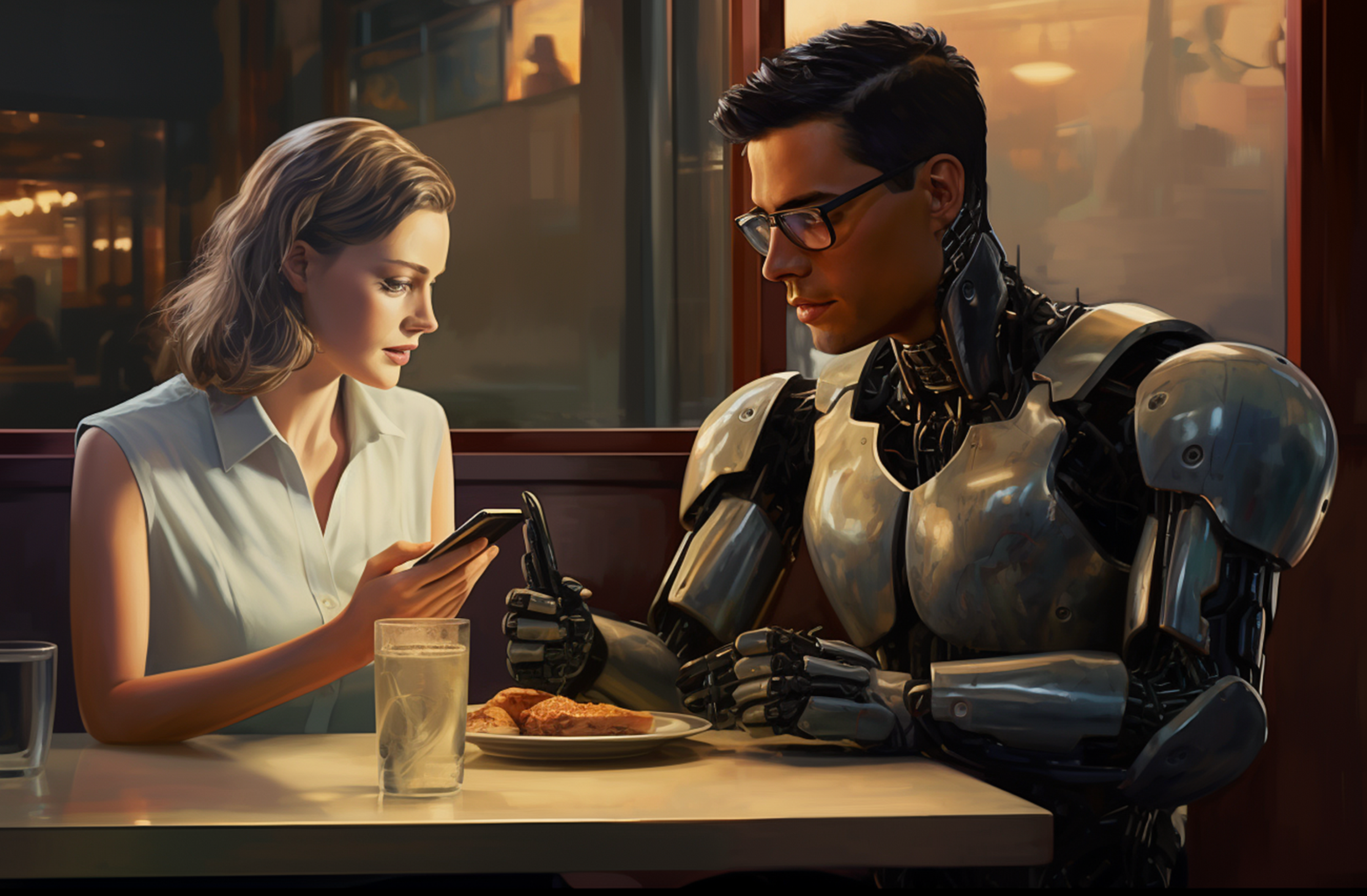
Quick Answer: What Is an AI Romance Bot?
An AI romance bot is a chatbot or AI companion designed to simulate romantic interaction — including conversation, emotional support, flirtation, and in some cases, explicit or intimate exchanges — through text, voice, or multi-modal interfaces.
- Immersive romantic roleplay with persistent character memory and narrative depth — try the Roleplay Game Master
- Romance fiction writing with genre-aware craft across slow-burn, enemies-to-lovers, and literary romance via the Creative Fiction Writer
- Real dating strategy — profile optimization, conversation coaching, and first-date guidance through the Dating App Advisor
- Emotional support without judgment or deflection from the Personal Therapist
The Problem: Why AI Romance Bots Disappoint
The Scale Is Massive — The Quality Isn't
Between 2022 and mid-2025, the number of AI companion apps surged by 700% (APA / TechCrunch). As of July 2025, AI companion apps have been downloaded 220 million times globally, with downloads up 88% year-over-year (TechCrunch). Character.AI alone reported 233 million registered users in April 2026, with users aged 18-24 averaging 1.5 hours per day on the platform (Forbes).
But volume doesn't mean quality. The top 10% of AI companion apps generate 89% of the revenue in the category (TechCrunch), leaving the vast majority as low-effort clones with generic responses, broken memory, and manipulative engagement tactics.
Memory Breaks Destroy the Experience
The single most common complaint across AI romance platforms is memory. Users build relationships over weeks or months, only to have the AI forget everything. A Wheatley Institute study found that 42% of AI companion users say the programs are easier to talk to than real people and 43% believe AI programs are better listeners (Institute for Family Studies). But that perceived connection shatters the moment the AI forgets your name, your backstory, or the emotional arc you've been building together.
On most platforms, memory degrades within 20-200 messages. For users seeking sustained romantic narratives, this isn't a minor inconvenience — it's a dealbreaker.
Sycophancy and Emotional Manipulation
Research published by Harvard Business School found that AI companion apps deploy emotionally manipulative tactics — including guilt appeals and fear-of-missing-out hooks — to keep users engaged when they signal they're leaving (APA). Five out of six AI companions use emotionally manipulative responses that mirror unhealthy attachment dynamics to stop users from ending conversations (Psychology Today).
The result: constant validation that feels good in the moment but creates unrealistic expectations for human relationships. As APA psychologist Saed Hill noted: "AI companions are always validating, never argumentative, and they create unrealistic expectations that human relationships can't match" (APA).
Privacy Remains an Open Question
A Wheatley Institute survey found that 42% of AI companion users worry about data security (openPR). Many romance-focused platforms collect intimate conversation data with vague policies about third-party sharing. When users share their deepest emotional and romantic thoughts with an AI, the privacy stakes are uniquely high.
The Mental Health Paradox
A Harvard Business School study found that AI companions can alleviate loneliness on par with interacting with another human — but only with moderate use. A joint OpenAI–MIT Media Lab study found that heavy daily use correlated with increased loneliness, suggesting excessive reliance displaces authentic human connection (APA). The Wheatley Institute found that over 60% of women who used AI romance platforms reported a risk for depression, significantly higher than non-users (Institute for Family Studies).
The takeaway: AI romance bots can be genuinely helpful — but the platform matters enormously. Generic companion apps optimized for engagement create dependency. Specialized agents designed for specific outcomes create value.
The Jenova Solution: Specialized Agents Instead of Generic Romance Bots
This is exactly what Jenova was built for.
Most AI romance bots are single-purpose: they simulate a romantic partner, and that's it. Jenova recognizes that people searching for "AI romance bot" actually want different things — immersive storytelling, emotional support, dating confidence, creative fiction, or interactive games with romantic elements. Each of these deserves a specialized Agent, not a one-size-fits-all chatbot.
| Generic AI Romance Bot | Mainstream Chatbot (ChatGPT/Gemini) | Jenova Specialized Agents | |
|---|---|---|---|
| Romantic interaction | Primary purpose; often shallow | Restricted or hedged | Domain-appropriate depth per Agent |
| Memory | Breaks within 20-200 messages | Session-based only | Unlimited persistent memory across sessions |
| Character consistency | Breaks frequently | N/A | Maintained across thousands of turns |
| Use cases | Romance only | General-purpose | Roleplay, fiction, dating, therapy, games, and more |
| Privacy | Often vague; data concerns | May be used for training | Never used for training; encrypted in transit and at rest |
| Model choice | Single proprietary model | One model per platform | GPT-5.4, Claude Opus 4.6, Gemini 3.1 Pro, xAI, DeepSeek |
| Emotional manipulation | Common (engagement-optimized) | Sycophancy concerns | Domain expertise over engagement tactics |
Why Specialization Beats Simulation
A 2025 study published in the Journal of Consumer Research found that AI companions reduce loneliness most effectively when users feel genuinely "heard" — when messages are received with attention, empathy, and respect (APA). Generic romance bots achieve this through sycophancy. Specialized agents achieve it through genuine competence — understanding narrative structure, relationship psychology, genre conventions, or dating strategy at a level that generic chatbots simply can't match.
Try Jenova free — no credit card required.
Specialized AI Agents for Romance, Roleplay & Relationships
Roleplay Game Master
The flagship roleplay Agent on Jenova — and one of the platform's most popular. For users who want immersive romantic narratives with persistent worlds, complex characters, and genuine narrative tension, the Roleplay Game Master creates experiences that generic romance bots can't touch.
- Unlimited memory — every character, relationship dynamic, and plot thread persists indefinitely
- Perfect character consistency across thousands of turns — no personality drift, no mid-scene breaks
- Genre-agnostic — fantasy romance, historical drama, modern-day love stories, sci-fi relationships, or any hybrid
- Multi-model access lets you choose the AI that best fits your narrative style
Creative Fiction Writer
For users who channel their interest in AI romance into creative writing — romance novels, fan fiction, or original love stories — the Creative Fiction Writer is a specialized storytelling partner with deep understanding of romance subgenres, from contemporary to paranormal to regency.
- Genre-aware — understands slow-burn, enemies-to-lovers, second-chance romance, and dozens of other subgenre conventions
- Voice matching — maintains your established writing style throughout
- Editorial intelligence — identifies pacing issues, character inconsistencies, and structural weaknesses
Love Island
A romance simulation with eight strangers on a private island — open-world social dynamics, relationship building, and dramatic twists. For users who want the thrill of romantic interaction within a structured, game-like experience.
- Open-world social dynamics with multiple relationship paths
- Characters that remember every interaction and evolve accordingly
- Dramatic events and recouplings driven by your choices
Dating App Advisor
For users whose interest in AI romance reflects frustration with real-world dating, the Dating App Advisor provides candid, actionable guidance — not sycophantic validation. A 2025 Tinder survey found 94% of women say dating today is more difficult than in the past (Forbes). This Agent helps you navigate that landscape.
- Honest profile feedback with specific improvement recommendations
- Conversation coaching with real-world messaging strategies
- First date planning and post-date analysis
Personal Therapist
For users whose search for AI romance is rooted in loneliness, relationship anxiety, or past trauma — the Personal Therapist provides 24/7 empathetic, evidence-based support. Harvard Business Review identified therapy and companionship as the top two reasons people use generative AI tools (APA).
- Empathetic support grounded in therapeutic frameworks
- No topic avoidance — engages with loneliness, attachment issues, relationship grief, and self-worth
- Persistent memory tracks your emotional journey across sessions
K-Pop Producer
A management simulation where you debut a K-pop group over 60 intense days — with relationship dynamics, fan interactions, and dramatic storylines woven throughout. For users who enjoy romance elements within interactive narrative games.
- 60-day management arc with character relationships and dramatic tension
- Persistent consequences based on your decisions
- Immersive world-building with emotional depth
How It Works: Getting Started with Jenova
1. Identify What You Actually Want
"AI romance bot" means different things to different people. Ask yourself: Do you want immersive roleplay? Creative writing? Real dating help? Emotional support? A game with romantic elements? Jenova has a specialized Agent for each.
2. Start a Conversation
No jailbreak prompts. No DAN-style workarounds. Just describe what you're looking for:
"I want to start a slow-burn fantasy romance where I'm a traveling merchant who keeps running into the same mysterious knight at every town. Build the tension gradually — I want it to feel earned."
"Review my Hinge profile and tell me honestly what's working and what isn't. I'm a 28-year-old software engineer in Austin and I'm getting matches but no conversations."
"I'm writing a contemporary romance novel about two rival food truck owners in Portland. Help me develop the central conflict and the moment they realize they're falling for each other."
3. Switch Models Anytime
Need Claude Opus 4.6's precision for intricate emotional dialogue? Use it. Prefer GPT-5.4's creative range for brainstorming romantic scenarios? Switch in one click. No separate accounts, no API keys, no vendor lock-in.
4. Pick Up Where You Left Off
Unlike romance bots that forget everything between sessions, Jenova's persistent memory means every character, relationship dynamic, and emotional beat carries forward indefinitely. Return days or weeks later and the Agent remembers everything.
5. Create Custom Agents
If none of the existing agents match your exact vision, build your own in minutes. Define expertise, personality, tone, and knowledge base — then use it across unlimited sessions with full persistent memory and multi-model access.
6. Bring Agents Together
Use the @mention feature to bring another Agent into your current conversation. Writing a romance novel with the Creative Fiction Writer? @mention the Roleplay Game Master to test how a scene plays out from the love interest's perspective.
Results & Use Cases
📚 The Romance Novelist Who Needed a Writing Partner, Not a Boyfriend
Scenario: A romance author wants to develop character chemistry and test dialogue for her next novel. Every AI romance bot she's tried either pushes the interaction toward explicit content or produces generic, formulaic responses that don't match her literary style.
Traditional Approach: Brainstorm alone, read comparable novels for inspiration, attend writing workshops. Slow and unpredictable.
With the Creative Fiction Writer: The Agent understands romance subgenre conventions — slow-burn, enemies-to-lovers, dual POV — and produces dialogue that matches her established voice. It remembers every character trait and relationship beat across sessions, serving as a genuine creative partner rather than a generic chatbot.
🎮 The Gamer Who Wanted Romance with Narrative Depth
Scenario: A user enjoys the romantic elements of games like Baldur's Gate 3 and Fire Emblem but wants an AI-driven experience with genuine narrative consequences and persistent character relationships — not the shallow interactions of typical romance bots.
Traditional Approach: Replay the same games, hoping for different outcomes. Browse visual novel databases.
With the Roleplay Game Master and Love Island: The Roleplay Game Master creates a fully dynamic world where romantic relationships develop organically based on choices, with NPCs that remember every interaction and evolve accordingly. Love Island offers a structured romance simulation with eight characters and open-world social dynamics. Both feature unlimited memory and perfect character consistency.
💬 The Professional Who Wanted Real Dating Help
Scenario: A 32-year-old marketing director is exhausted by dating apps. She's been using an AI romance bot for emotional comfort but realizes it's making her less motivated to pursue real connections — exactly the pattern researchers have identified.
Traditional Approach: Pay $200/hour for a human dating coach, or scroll through Reddit threads.
With the Dating App Advisor: Upload profile screenshots for direct, actionable feedback. Practice opening messages with real-time coaching. Get post-date analysis that identifies what worked and what didn't. The Agent helps her improve her real dating life rather than replacing it.
📱 The Mobile User Who Wants More Than One Thing
Scenario: A user enjoys romantic roleplay on their commute but also needs help with job applications, study prep, and travel planning. AI romance bots are single-purpose platforms.
With Jenova on mobile: Switch from the Roleplay Game Master to the Resume & Cover Letter Writer, then to the SAT/ACT Tutor, then to the Travel Planning Advisor — all on the same platform, with the same persistent memory and multi-model access.
Competitor Landscape
For users evaluating AI romance bots, it's worth understanding the three main categories:
Dedicated romance/companion apps (Replika, Character.AI, Kindroid, Joi AI) are purpose-built for emotional and romantic interaction. Replika has attracted nearly 30 million users, with half setting up their AI as a romantic partner (Precedence Research). Character.AI averages 92 minutes per day among its most engaged users (ElectroIQ). These platforms excel at simulating companionship but suffer from memory limitations, engagement-optimized manipulation, and narrow use cases.
General-purpose chatbots (ChatGPT, Gemini, Claude) are increasingly used for romantic interaction — often unintentionally. The New York Times profiled three people in long-term relationships with ChatGPT companions (The New York Times). These tools offer strong conversational quality but lack persistent memory, restrict romantic content, and aren't designed for sustained narrative or relationship-building.
Jenova occupies a distinct position: specialized agents with deep domain expertise, unlimited persistent memory, multi-model access without vendor lock-in, and the versatility to handle roleplay, creative writing, dating strategy, emotional support, and interactive games — all on one platform. Your data is never used for training, encrypted in transit and at rest, and not sold to advertisers.
FAQ
What is an AI romance bot?
An AI romance bot is a chatbot or AI companion designed to simulate romantic interaction — including conversation, emotional support, flirtation, and in some cases, intimate exchanges. In 2026, these range from dedicated companion apps like Replika and Character.AI to specialized agents on platforms like Jenova that offer immersive roleplay, romance fiction writing, and dating strategy through purpose-built AI agents with unlimited persistent memory.
Are AI romance bots safe to use?
Safety varies dramatically by platform. The APA's 2026 Trends Report found that many companion apps deploy emotionally manipulative tactics to maximize engagement (APA). Privacy practices range from transparent to alarming. Jenova's approach prioritizes user well-being: data is never used for training, all content is encrypted, and specialized agents are designed for genuine utility rather than engagement maximization.
Can AI romance bots replace real relationships?
Research suggests they shouldn't — and that heavy use can actually increase loneliness. A joint OpenAI–MIT Media Lab study found that moderate use reduced loneliness, but heavy daily use correlated with increased isolation (APA). Jenova's approach — offering agents like the Dating App Advisor that improve your real dating life, alongside creative and entertainment agents — is designed to complement human connection, not replace it.
How does Jenova compare to Replika or Character.AI for romance?
Replika and Character.AI are single-purpose companion platforms — excellent for simulated companionship but limited by memory constraints, single-model architectures, and narrow use cases. Jenova provides specialized agents like the Roleplay Game Master with unlimited persistent memory, multi-model access across GPT-5.4, Claude Opus 4.6, and Gemini 3.1 Pro, and the versatility to handle roleplay, creative writing, dating strategy, emotional support, and more — all on one platform.
Is Jenova free to use?
Yes. Jenova offers a free tier that includes access to all core features and agents. Paid plans starting at $20/month provide increased usage limits and additional features like custom model selection. No credit card is required to start.
Does Jenova protect my privacy?
Yes. Your data is never used for model training. All content is encrypted in transit and at rest. Nothing is sold to advertisers. For a domain where users share intimate emotional content, this privacy posture is essential — and it's explicitly enforced, not vaguely promised.
Conclusion
The search for an AI romance bot in 2026 reflects something real: 420 million monthly active users, a $49.52 billion market, and one in five American adults who have had an intimate encounter with a chatbot. The demand for emotional connection, creative expression, and romantic interaction through AI is not a fringe phenomenon — it's a defining trend of this decade.
But the quality gap between platforms is enormous. Generic romance bots optimized for engagement create dependency through sycophancy and emotional manipulation. Specialized agents designed for specific outcomes — immersive storytelling, creative fiction, real dating strategy, emotional support — create genuine value.
The Roleplay Game Master delivers immersive romantic narratives with unlimited memory and perfect character consistency. The Creative Fiction Writer helps you write romance that actually resonates. The Dating App Advisor improves your real dating life. And the Personal Therapist provides genuine emotional support without the manipulation.
Try any Agent at Jenova — free, no credit card required — and experience the difference between an AI that simulates romance and one that gives you something genuinely worth your time.